
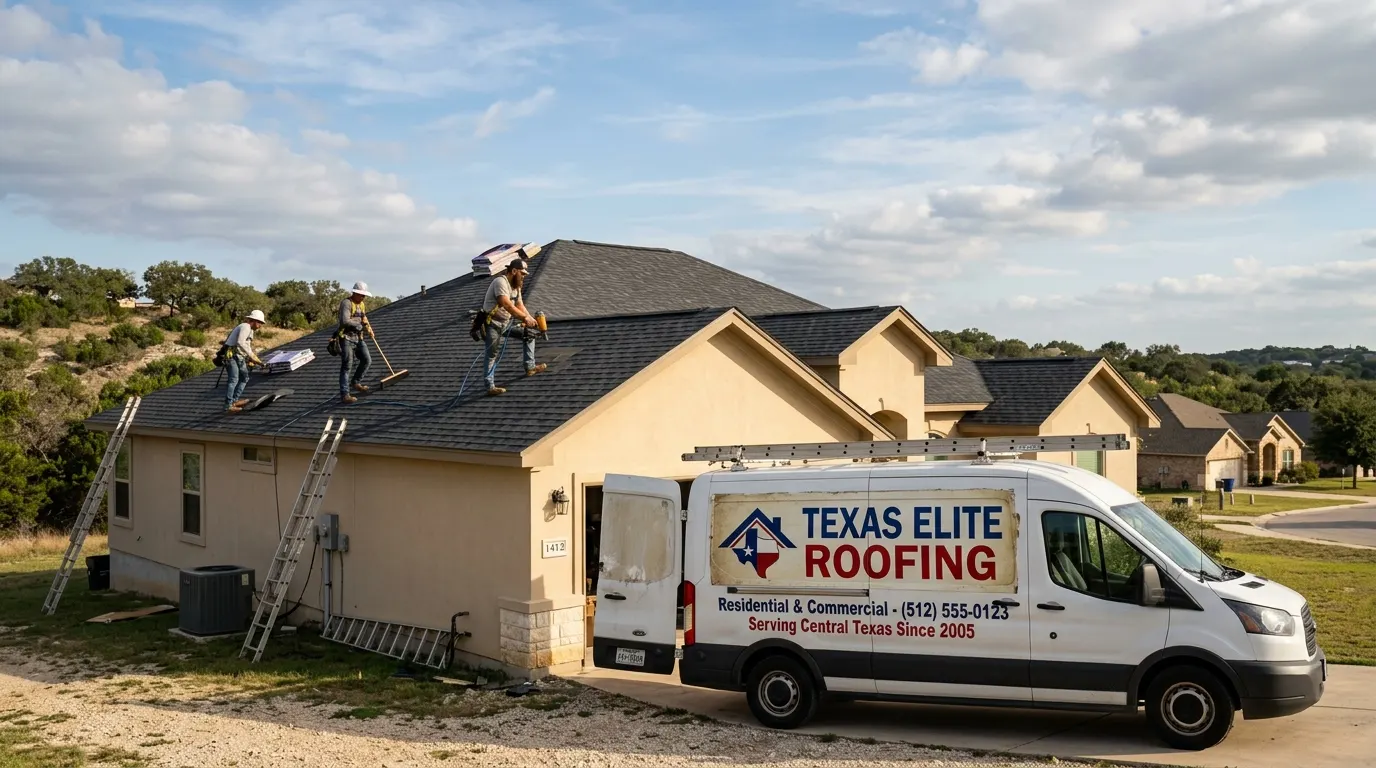
Your roofing website is either building trust or leaking leads. Roofing is different from every other home service trade. The purchase is expensive, infrequent, and anxiety-driven. A homeowner might hire a plumber three times in a year. They'll hire a roofer once every 20 years. That changes everything about what your website needs to do.
When someone needs a plumber, they call immediately. When someone needs a roofer, they research for weeks. They compare. They ask neighbors. They read reviews at night. They check your license, your insurance, your gallery, your financing, and your Google rating before they ever pick up the phone.
This guide covers what actually makes a roofing website generate leads. Written for roofers, not designers.
Why roofing is different from other home service trades
Every home service trade has its own customer psychology. Roofing is unique because the stakes are high, the decision is rare, and the customer is scared of getting it wrong.
A bad plumbing job means a leak. A bad roofing job means structural damage, mold, and thousands in additional repairs. Homeowners know this. They approach the decision differently.
Most home service websites are built for impulse decisions — make the phone number visible, prompt the call, close the sale. That works for plumbers and electricians. It doesn't work for roofers. A roofing website needs to be a trust-building tool first and a lead generation tool second. The phone call happens when the homeowner feels confident, not when they first land on the page.
A roofing website that leads with "call now" and nothing else is asking a homeowner to make a $10,000 decision in 30 seconds. They won't. They'll leave and keep researching.
Roofing customers behave differently because the purchase is different. A plumber's customer calls in panic. A roofer's customer calls after weeks of research. Your website needs to serve the researcher, not the impulse buyer. If you build for the wrong psychology, you get no calls.
Before-and-after galleries are not optional
This is the single most important page on a roofing website. A homeowner deciding whether to call you needs to see that you've done this before — and done it well.
A before-and-after gallery organized by roof type. Asphalt shingle replacements. Metal roof installations. Tile and slate work. Flat roof repairs. Each project with a clear before photo, an after photo, and a brief description of the work done. Real homes. Real results. Not stock photography.
Galleries build confidence in a way that text cannot. A homeowner who sees 20 completed projects that look like their house, their neighborhood, their situation, will call. A homeowner who sees a generic website with no proof of work will keep searching.
The gallery should be prominent in your navigation — not buried in an "our work" page that's hard to find. Make it easy to browse. Group by project type. Include the roof size, material used, and timeline. Every detail adds credibility.
Trust signals that matter for roofing
Homeowners evaluating a roofer look for specific signals that tell them you're legitimate. These are different from what a plumber or HVAC contractor needs.
License and insurance. Your state roofing license number, general liability insurance, and worker's compensation coverage. Roofing is a high-risk trade. Homeowners know they can be held liable if an uninsured roofer gets injured on their property. Displaying insurance proof removes that fear.
Years in business. Roofing companies come and go. A company that's been in business for 10, 15, or 20 years signals stability and reliability. Put it on the homepage.
Manufacturer certifications. CertainTeed, GAF, Owens Corning, IKO — manufacturer certification means the company has met training and quality standards set by the shingle manufacturers. It also means better warranty coverage for the homeowner. Display these badges prominently.
Multiple review sources. Google reviews are the standard. But for roofing, BBB rating, Facebook reviews, and GuildQuality reviews all add credibility. Display ratings from multiple platforms, not just one.
Real team photos. Homeowners are inviting you onto their roof — literally over their home. Photos of your actual crew, your actual trucks, your actual office build familiarity and trust. Stock photos of generic contractors hurt more than they help.
Warranty information. Workmanship warranty from you plus manufacturer warranties on materials. Clear, simple language about what's covered and for how long. This is often the deciding factor between two otherwise similar bids.
Storm damage landing pages are your secret weapon
One of the highest-ROI pages a roofing company can create is a storm damage landing page. After hail, high wind, or severe weather hits your area, homeowners in affected neighborhoods search for storm damage roof repair, roof insurance claim help, and emergency roof tarping.
A dedicated page optimized for storm damage in your specific market — with local keywords referencing the specific storm event, neighborhoods affected, and types of damage common in your area — captures that traffic and positions you as the go-to expert for storm damage restoration.
Include clear information about the insurance claim process. Most homeowners have never filed a roof insurance claim. They're anxious about it. A page that walks them through the process — inspection, documentation, adjuster visit, claim approval, repair — removes the biggest barrier to calling after a storm.
Storm damage pages should be updated when storms hit. A generic "storm damage repair" page that never changes is less effective than one that references recent weather events in your area. Quick updates after a hail storm can capture weeks of high-intent search traffic.
Financing needs its own page
Roof replacement is one of the most expensive home maintenance projects. Average costs range from $6,000 to $15,000 depending on roof size, material, and complexity. Most homeowners don't have that amount available for an unexpected expense.
Displaying financing options — and having a dedicated page for them — removes the biggest barrier to moving forward. A financing page with clear terms, partner lenders, estimated monthly payments, and a simple application or pre-qualification form captures leads who are ready to move forward but need payment flexibility.
Many roofing websites mention financing in passing. A dedicated page treats it as a serious option and signals that you understand the financial reality of the customer. It also gives you content to target keywords like "roof financing" and "roof replacement payment plans."
Service pages for the full roof system
A roof is more than shingles. A complete roofing company offers multiple services, and each one needs its own page on your home services website.
Roof replacement. Full tear-off and replacement. Material options, process overview, timeline, and cost factors. This is your flagship service page.
Roof repair. Leak repair, shingle replacement, flashing repair, vent boot replacement. Different search intent from replacement — someone with a small leak needs a repair, not a new roof.
Storm damage. Hail damage, wind damage, insurance claims assistance. Time-sensitive, high-intent traffic that needs immediate attention.
Skylight installation. Specialized service with its own set of customer questions about cost, installation, and benefits.
Gutter installation and repair. Related service that extends the roof system. Often searched separately from roofing keywords.
Attic insulation and ventilation. Part of the roof system that affects energy efficiency and roof lifespan. Growing search demand as homeowners focus on energy costs.
Each page targets a different set of keywords and serves a different customer need. A generic "services" page that lists everything cannot rank for all of these searches. For most roofing contractors, that means 12 to 16 individual service pages.
How the research timeline changes your site design
A homeowner considering a roof replacement follows a different timeline than a homeowner needing emergency plumbing. That changes how your site should be structured.
Most roofing visitors won't call on their first visit. They'll browse. They'll look at your gallery. They'll read your reviews. They'll check your about page. They'll leave and come back days or weeks later. That's normal.
Your site needs to make that research process easy. Clear navigation that lets them find galleries, reviews, financing, and service information without hunting. Content that answers the questions they have at each stage of research.
Early stage: "How much does a roof replacement cost?" and "What are the best roofing materials?"
Mid stage: "Is this roofer licensed and insured?" and "What do their past projects look like?"
Late stage: "Do they offer financing?" and "What warranty do they provide?"
If your site only serves the late stage — a phone number and a contact form — you lose the visitors who aren't ready to call yet. And most roofing visitors aren't ready to call yet.
Blog content that covers cost guides, material comparisons, maintenance tips, and seasonal roof care keeps visitors on your site longer, builds authority, and positions you as the roofer to call when they're ready.
How your website and Google Maps work together
Google Maps is where many local roofing searches start. Your Google Business Profile determines whether you show up in the map pack when someone searches for "roofer near me" or "roof replacement in your city."
Your profile needs the right primary category — Roofer — plus secondary categories like Roofing Contractor, Roof Repair, and Roof Replacement. A service area that covers every city you work in. Photos updated regularly, especially of recent projects. Reviews responded to consistently.
Your website's job is to close the deal after the profile gets the click. It needs to back up the trust signals from your profile and give the homeowner the deeper information that turns a researcher into a lead. Consistent NAP across both is critical. Any inconsistency hurts trust with both Google and potential customers.
Profile gets you found. Website gets you hired. For roofing, the website does more of the heavy lifting because the decision takes longer.
The speed problem for roofing websites
Roofing websites are often the slowest home service sites. High-resolution before-and-after photos, video content from drone inspections, heavy page builders, and cheap hosting combine to create a site that loads slowly on mobile.
When that happens, visitors leave before they see your work. They never get to the gallery. They never read your certifications. They never see your financing options. All the trust-building content you invested in never gets seen.
Compressed images, clean code, and fast hosting are not optional. A roofing website that takes five seconds to load on a phone is wasting every dollar spent on the photos and content inside it.
Frequently asked questions
How much does a roofing website cost in 2026?
Anywhere from $16 a month for a DIY builder to $15,000 for a custom agency build. Most single-location roofing companies do well with a professionally built site between $997 and $2,500 that includes local SEO, schema markup, before-and-after galleries, financing information, and service area pages. Avoid subscription models charging $300 to $800 a month. Over three years that's $10,800 to $28,800 and you own nothing.
What is the most important page on a roofing website?
The before-and-after gallery. Roofing is visual and high-ticket. Homeowners need to see your actual work to feel confident. A dedicated gallery organized by roof type with project descriptions is more convincing than anything you can say about yourself.
How many pages does a roofing website need?
At minimum: a homepage, individual pages for each service (roof replacement, roof repair, storm damage, skylight installation, gutters), a before-and-after gallery, a financing page, service area pages for every city you cover, and a contact page. Most roofing companies need 12 to 16 pages to compete in local search.
How do I get my roofing website to show up on Google?
Three things. An optimized Google Business Profile with the right categories and service areas. Individual service pages targeting specific keywords like "roof replacement in your city" and "storm damage repair in your city." Consistent positive reviews from multiple platforms. Most roofing companies start seeing results within 60 to 90 days if these are in place.
Do roofers need storm damage landing pages?
Yes. Storm damage pages optimized for your local market capture high-intent traffic after hail, wind, or severe weather events. Including insurance claim process information removes a major barrier to calling.
Should I display financing information on my roofing website?
Yes. Roof replacement is expensive and often unexpected. Displaying financing options removes the biggest barrier to moving forward. A dedicated financing page with terms, partner lenders, and an application link captures leads who need payment flexibility.
How long does it take to build a roofing website?
Forty-eight hours to 12 weeks depending on who builds it. Template services launch in 2 to 4 weeks. Custom agencies take 4 to 12 weeks. Some providers like Ideal Media Pro launch in 48 to 72 hours with custom design, local SEO, schema markup, and galleries included.
Can I build my own roofing website?
You can. Wix and Squarespace run $16 to $49 a month. The trade-off is time and technical know-how. DIY sites usually don't include proper local SEO, schema markup, professional galleries, or conversion-optimized layouts. Most roofing companies who go the DIY route end up hiring a professional within a year.
Getting a roofing website that actually generates leads
You don't need a $15,000 home services website. You need a site that loads fast, showcases your work, builds trust with every signal a homeowner looks for, has dedicated pages for each service you offer, and makes it easy to take the next step when they're ready. That's not a premium feature. That's the baseline for generating roofing leads in 2026.
Agencies charging $5,000 to $15,000 aren't delivering five times the value. They're charging for overhead, account managers, and sales commissions. Subscription services at $379 a month are worse — you pay forever and own nothing.
For a complete breakdown of what every home service business needs from a website in 2026, start with The Honest Guide to Web Design for Home Service Businesses. Then come back here for the roofing-specific details that matter most to your trade.
The right move for most roofing companies is a professionally built site at a fair one-time price. Everything that actually generates leads included as standard. Ideal Media Pro's home service web design package was built around that. $997 one-time. Full ownership. Launch in 48 to 72 hours. Local SEO, schema markup, before-and-after galleries, and financing pages built in from day one.
Get a Roofing Website That Generates Leads
$997 one-time. Full ownership. Launch in 48–72 hours. No subscriptions, no hidden fees, no contracts.
View the $997 Home Service Package